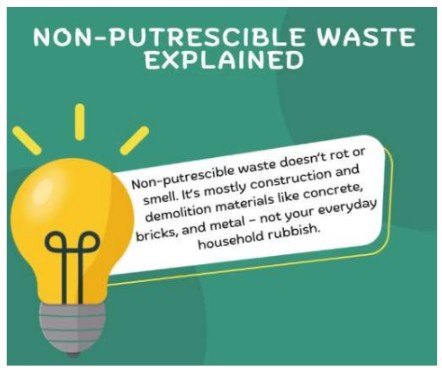
Non-putrescible waste does not rot or smell - it's mostly construction and demolition waste, like concrete, bricks and metal.
| Putrescible waste (smelly waste) |
Non-putrescible waste |
| Contains organic matter that breaks down and decays. |
Does not decay under normal conditions. |
| Common example: household garbage with food scraps. |
Includes durable materials such as:
- Glass, plastic, rubber, ceramics
- Bricks, cement, metal
- Soils, timber, garden trimmings
- Agricultural and forestry materials
- Natural fibrous organic matter
|
| Produces unpleasant odours when decomposing. |
Does not emit offensive odours. |
| Attracts pests and creates hygiene issues. |
Does not attract vermin or pests like flies, birds, or rodents |
| Needs frequent collection to avoid health risks. |
Stable and suitable for recycling into new construction products. |
Why Is Construction & Demolition (C&D) Waste Different?
-
Construction and demolition (C&D) waste is stable, clean, and tested for pollutants before disposal or recycling. It’s ideal for creating recycled, lower-carbon building materials.


