The West Burleigh Construction Waste and Resource Recovery Project (WBCWRR Project) will start around 2032. At first, mobile equipment will be used for small-scale resource recovery of limited construction waste streams.
Quarrying in the East pit will finish around 2034 (depending on market demand) to allow for the development of the non-putrescible landfill. The West pit will keep operating for a few more years to supply remaining quarry materials.
Filling the East Pit
When quarrying finishes in the East pit, work will begin on the non-putrescible constructive and demolition waste landfill. This facility will be able to receive up to 700,000 tonnes a year of non-putrescible construction waste—dry, clean materials such as concrete, bricks and asphalt (not household rubbish or anything smelly). This will continue for about 23 years, during which the quarry void will be progressively filled and shaped into a safe, stable landform suitable for future use.
 Permanent Resource Recovery Facility
When quarrying in the West pit comes to an end, a fully enclosed recycling facility will be built on the site. It will process up to 300,000 tonnes each year of building and construction materials. By recovering and re-using these materials, the facility will help reduce the amount of waste sent to landfill and support higher recycling rates in the city.
How Will It Be Built?
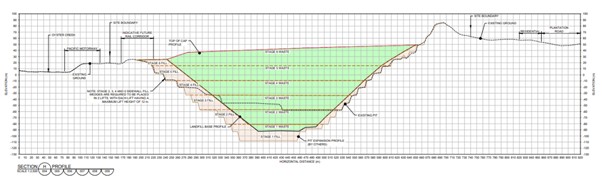
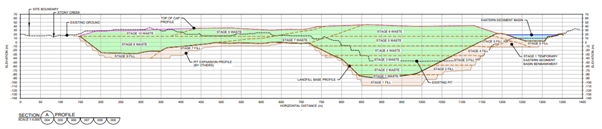
The non-putrescible landfill will be developed in stages, starting in the larger eastern pit and then progressing to the smaller western pit. The final landform will stay below the existing ridge lines and trees to reduce visual impact.
The landform will reach about 48 metres high in the east (approximately 30m below the crest of the existing quarry) and 30 metres high in the west. Across the site, the final surface will be gently sloped (3–5%) and planted with grasses to stabilise soil, manage stormwater, and help prevent weeds.
Future Use
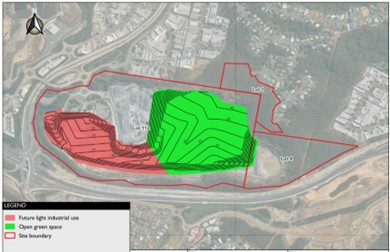
Once rehabilitation is complete, the site will transition into open green space. This means the land will be safe, stable and covered with vegetation, creating a natural area instead of an empty quarry void.
The green space will provide opportunities for conservation, helping restore native plants and habitats for local wildlife. It will also improve the visual landscape, blending with the surrounding environment.
In the long term, the rehabilitated land could offer community benefits, such as opportunities for recreation, walking trails or other open space uses, subject to future planning. The restored landscape will also help reduce erosion, support biodiversity and contribute to the area’s overall environmental health.